What’s next after NBA’s Clippers punishment? Five lingering questions about Kawhi Leonard trade, appeals, more

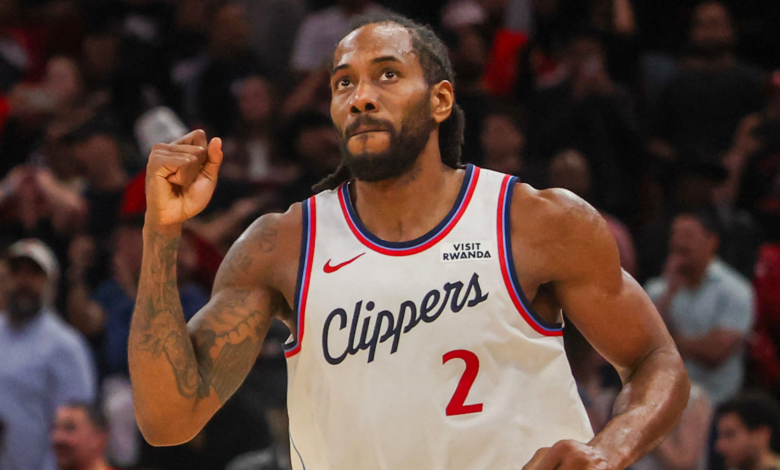
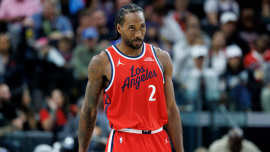
The Kawhi Leonard investigation has concluded, and the NBA has dropped the hammer on the Los Angeles Clippers. Based on the findings of the law firm Wachtell, Lipton, Rosen & Katz, the NBA has announced the following punishments:
- The Clippers will forfeit five first-round picks: one each in 2029 (via the Indiana Pacers), 2030, 2031, 2032 and 2033.
- The Clippers have been fined $30 million.
- Clippers owner Steve Ballmer and President of Business Operations Gillian Zucker have each been suspended from team and league activities for a year. President of basketball operations Lawrence Frank has been suspended for six months.
- Leonard has been fined $700,000.
- Leonard’s uncle, Dennis Robertson, has been banned from conducting business or otherwise engaging with NBA teams and their affiliates on behalf of any player, employee or league personnel for five years.
The Clippers released the following statement soon after the NBA’s announcement rejecting the league’s punishments and findings:
“We vehemently reject the NBA’s findings, which are the result of a heavily biased investigation seeking to justify a predetermined narrative rather than facts and evidence,” the statement said. “What the league told us privately differs from what it announced today publicly, and they have not held themselves close to the standard Commissioner Silver set at the start of this investigation to ensure its fairness and accuracy. For the past year, we cooperated fully and in good faith and we will now fight just as hard to demonstrate our innocence. We intend to vigorously challenge these findings and penalties through every avenue available to us and look forward to an ethical and impartial arbitration process.”
So what happens now? What does a possible appeal look like? Will Leonard ultimately get traded to the Toronto Raptors? What does this say about circumvention at large? Let’s dig into five of the most important lingering questions following the NBA’s bombshell announcement on Wednesday.
1. Is there a possible appeals process for the Clippers?
ESPN has reported that the NBA’s findings are final and there is no formal appeal or arbitration process available to the Clippers with the league. The only avenue available to the Clippers to fight this would be in court. Complicating matters for the Clippers here is the fact that the NBPA has agreed to all of the punishments laid out above, leaving the team on an island to fight alone.
Where exactly this leaves the Clippers is unclear. There isn’t exactly a precedent for an NBA team challenging the league in court over a punishment. We have seen teams sue each other, such as the suit the New York Knicks brought against the Raptors in 2023, but the judge ruled that NBA commissioner Adam Silver should resolve the dispute. Players have sued the league before, such as in Spencer Haywood’s eligibility case or Oscar Robertson’s suit that created free agency. Former Clippers owner Donald Sterling even sued the NBA after he was banned for life, but he settled after selling the team to Ballmer.
This would seemingly be an uphill battle for the Clippers without procedures laid out for them to challenge the punishment in the CBA. Nonetheless, the Clippers appear willing to fight for the time being.
2. So… Kawhi Leonard is a Raptor, right?
The Clippers agreed to trade Leonard to the Raptors in June, but in July, the Raptors held off on completing the trade because doing so would have made them responsible for any punishments that came Leonard’s way. Essentially, had they completed the trade and Leonard’s contract had been voided, they simply would have lost their draft picks for nothing.
But Leonard has not been suspended and his contract has not been voided. He has been fined, but that does not affect his ability to play for the Raptors next season. Therefore, there is no reason to believe at this stage that the trade will not ultimately happen. All parties involved seem to believe that it will, as Leonard even said in his statement that he is focused on what he can control in his return to Toronto.
“As I return to Toronto, I am focused on what I can control, closing this chapter, and moving forward with a clean slate,” he said in a statement released through Harrison Gaines, his new agent.
3. How did the NBA land on these specific picks?
The picks the Clippers are losing in 2030, 2031, 2032 and 2033 are their own. This is notable because the Clippers, through the Leonard trade, were set to acquire picks from the Raptors in 2031 and 2033. They will seemingly keep those selections. However, the pick they are losing in 2029 will come from the Pacers, which was acquired in the Ivica Zubac trade
Why is this? The obvious explanation would be that while the Clippers do control another 2029 first-round pick, it is encumbered. They owe top-three protected swap rights to the Philadelphia 76ers through the James Harden trade. Essentially, the Clippers already gained value from that pick by using it to land Harden, whereas the Pacers pick, which is fully unprotected, was untouched.
All of this, in essence, sets a potential precedent for future penalties the league might render, whether for cap circumvention or other violations. Ideally, the league would only strip a team of its own original, unencumbered draft picks, but in an NBA in which teams are increasingly without those picks because of aggressive trading, it seems as though the NBA would rather strip a team of an unencumbered, external pick than an encumbered, internal one if presented with the choice.
Lastly, it is notable that all the picks stripped come in the next seven drafts. This falls in line with the seven-year window in which teams are allowed to trade first-round picks. The NBA has never stripped a team of draft picks that fall outside of that seven-year window, and that precedent remains intact.
4. What does this say about the other active cap circumvention investigation?
While Leonard was by far the most notable player being investigated for cap circumvention, he was not the only one. Earlier this offseason, the Milwaukee Bucks agreed to a four-year, $64 million contract with Gary Trent Jr., which the NBA quickly chose to investigate.
The nature of the alleged circumvention in the Trent case is very different. Rather than funneling money to Trent through a sponsor, the investigation here centers on whether or not the Bucks made an illegal agreement with Trent during prior free agent cycles to convince him to play for them for less than his fair market value with the understanding that he could be paid more than he was actually worth once the team had accumulated the necessary Bird Rights to do so.
Trent signed with the Bucks for the minimum in 2024, returned for a 20% Non-Bird raise in 2025, but this offseason, he signed the ninth-largest overall free-agent contract despite the widespread perception that he was worth only the minimum following a miserable season. Not only is the nature of the alleged violation different, but the procedure for actually punishing Trent and the Bucks likely would be as well. Remember, the NBPA agreed to the NBA’s punishments of the Clippers. Perhaps not coincidentally, Leonard gets off here nearly scot-free.
Why wasn’t Kawhi Leonard’s contract wasn’t voided? The differences vs. NBA’s last major cap circumvention case
Robby Kalland
If the Bucks and Trent had an illegal agreement, precedent suggests that the NBA would seek to void the contract as it did for Joe Smith and the Minnesota Timberwolves in 2000. The NBPA would likely push back much harder against that, especially since it is unlikely that the NBA can find the level of evidence it did in the Smith case, where everything was in writing. A Trent punishment might hinge on Article XIII, section 2(d) of the CBA, which states that cap circumvention “may be proven by direct or circumstantial evidence, including, but not limited to, evidence that a Player Contract or any term or provision thereof cannot rationally be explained in the absence” of cap circumvention.
Essentially, if there is no way to explain a contract without circumvention, then it can be called circumvention.
These are, again, entirely separate investigations. But the Leonard verdict suggests that the NBA will pursue circumvention penalties aggressively if it believes they are warranted. Considering the five-pick precedent that the league upheld from Smith to Leonard more than a quarter-century later, the Bucks would seemingly be facing an enormous punishment if they did indeed circumvent the cap to sign Trent.
5. Could the Clippers get any of these picks back?
We’ve cited the Smith precedent a few times, but the punishment the Timberwolves endured comes with a significant caveat. Two of the five first-round picks that were taken from Minnesota were eventually returned. Could the Clippers eventually get two of their five picks back?
In theory, yes, but it’s worth wondering how much what comes next will determine whether or not that happens. Then-Timberwolves owner Glen Taylor admitted to the secret arrangement and took full responsibility for what happened. To this point, Ballmer has not done so and the Clippers have been clear in their intention to fight back against the league’s ruling.
With the Smith case, then-commissioner David Stern cited “the team’s conduct since the matter concluded” as one reason for restoring the team’s 2005 pick. Whether he was referring to good behavior on Minnesota’s part by not engaging in further circumvention and/or the team’s cooperation in accepting culpability is not fully clear, but the last thing the NBA wants is a lengthy court battle with discovery dragging any unsavory league business into the public eye.
There are no specific procedures for the return of draft picks laid out by the CBA. That is something done at the commissioner’s discretion. Battling the commissioner in court (and sending him a lengthy letter calling the investigation “heavily biased”) doesn’t seem like a great way of earning his favor. Precedent supports the Clippers getting some picks back, but that is no certainty, and it’s hard to imagine what comes next from the Clippers won’t factor into what winds up happening here.
Source: www.cbssports.com